Give the Walk-In a Maintenance Schedule Before It Gives You an Emergency
A practical cooler program separates daily operating checks from qualified service work and gives every exception an owner.
By Tom Brennan, Senior Writer · · 6 min read
This is practical analysis. Examples are illustrative composites, not reports on specific restaurants.
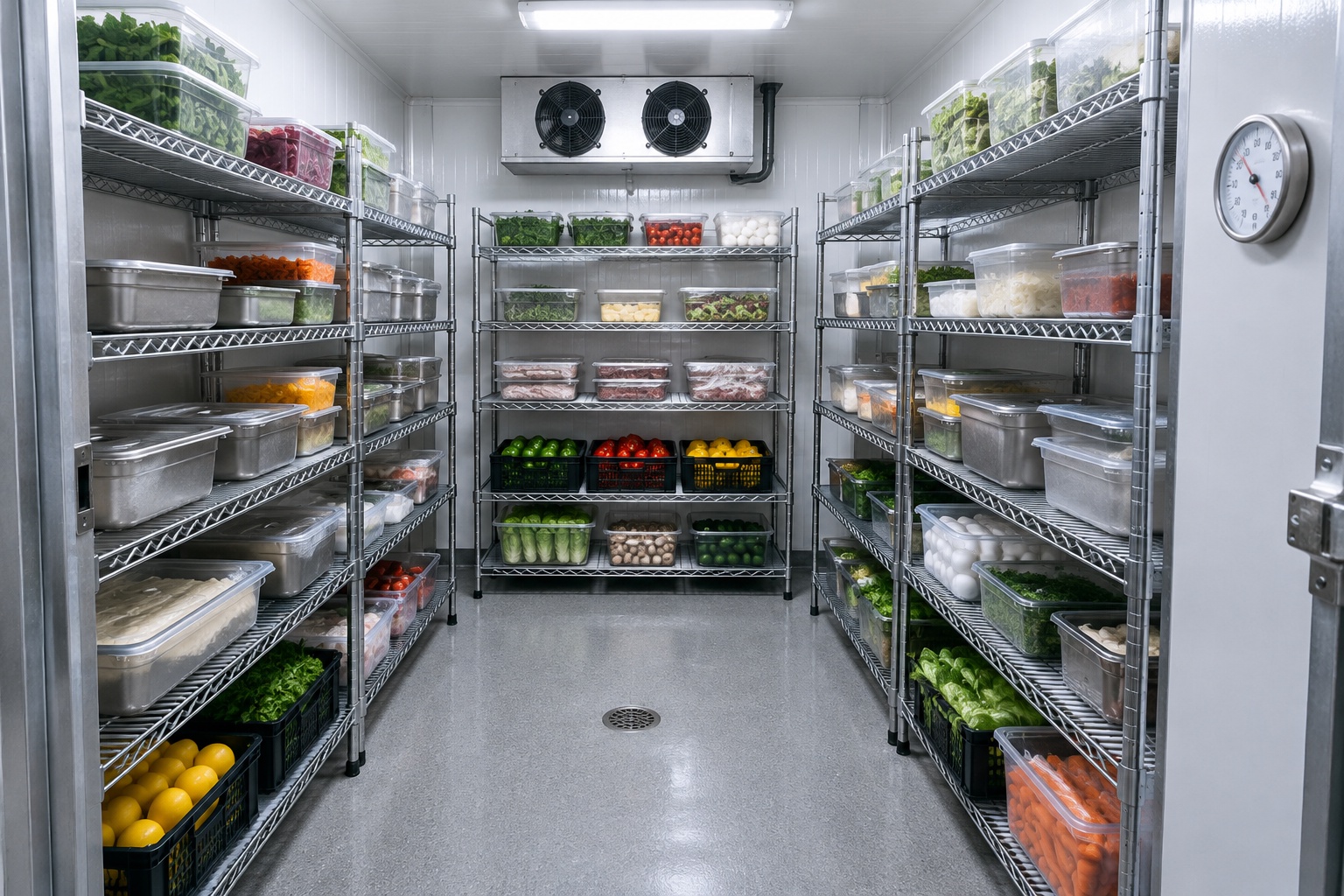
A walk-in cooler rarely announces trouble at a convenient time. A door that does not close cleanly can become background noise until the kitchen discovers warming product during prep. The useful maintenance schedule is therefore not the longest checklist. It is the one that connects a short daily inspection, a repeatable cleaning routine and a service escalation plan. In an illustrative independent restaurant, those three pieces turn refrigeration from an occasional emergency into an assigned operating responsibility with records managers can actually use.
Put opening and closing checks on the clock
Begin with the restaurant’s food-safety plan, applicable local requirements and the equipment manufacturer’s instructions. Those sources should establish acceptable conditions, monitoring methods and corrective actions. For foods requiring time and temperature control, the FDA Food Code model generally uses 41°F or below for cold holding, but local adoption and product-specific rules matter. An air display alone does not establish food safety. Staff need the right food-temperature checks and must follow the approved response when readings indicate a problem.
At opening, assign a trained employee to review the cooler reading, check representative product temperatures as required and inspect the door, gasket and visible interior. Record the actual reading, time and initials rather than checking a box marked fine. Look for water where it does not belong, unusual ice, blocked airflow or a door propped open by a delivery cart. Staff should report unusual noise or repeated alarms, not attempt to diagnose electrical or refrigeration components themselves.
At closing, focus on conditions the next shift will inherit. Verify that containers are arranged for airflow, labels are readable and nothing prevents the door from latching. Do not pack hot production into the walk-in without following the restaurant’s approved cooling procedures and capacity limits. A cooler designed for holding is not an unlimited rapid-cooling system. If deliveries or batch preparation routinely overwhelm it, management needs to revise the process or assess equipment capacity rather than blame the closing crew.
Schedule cleaning without creating another hazard
Create a weekly inspection and cleaning assignment that fits the manufacturer’s guidance. Accessible door gaskets, handles, floors and shelving need appropriate cleaning methods and chemicals. Move and protect food as necessary, and keep cleaning equipment from contaminating stored product. Inspect for damaged seals, loose hardware and deteriorating surfaces while the area is visible. A recurring puddle should produce a maintenance ticket, not merely another mopping assignment. Record what was found and who is responsible for the next action.
Condenser and evaporator care require a different boundary. Location, accessibility and equipment design determine what trained restaurant employees can safely do and what belongs to a qualified technician. Do not instruct staff to remove guarded panels, work near energized components or handle refrigerant. Ask the service provider to establish an inspection frequency based on the manufacturer’s recommendations and the actual environment. A dusty equipment area or heavy operating load may justify attention sooner than a generic calendar reminder suggests.
For budgeting, consider a composite restaurant that schedules four service visits at $225 each, or $900 annually, with repairs billed separately. That is an illustrative quote structure, not a market rate or a guarantee against failure. Ask what each visit includes, whether cleaning is included and how emergency calls are priced. Also ask whether the provider documents developing issues. A low-priced visit that produces no usable findings is difficult to compare with a more complete preventive service agreement.
- Daily: record required temperatures and inspect the door and airflow.
- Weekly: complete approved cleaning and review unresolved defects.
- On the service schedule: have qualified personnel inspect specified components.
- After an alarm: follow the food-safety response and document disposition.
- After repairs: verify performance and close the maintenance ticket.
Make exceptions impossible to lose
Define escalation before a temperature alarm sounds. The employee needs a named manager, a backup contact and clear instructions for protecting food while the situation is evaluated. Product disposition depends on temperature history, elapsed time, food type and applicable requirements; smell and appearance are not reliable safety tests. If the history is uncertain, follow the food-safety plan and appropriate regulatory guidance rather than improvising. The manager should also know which alternative storage space is available and whether it has adequate capacity.
A remote alarm can shorten the time between a problem and a response, but only if someone receives and acts on it. Test notifications, contact lists and any backup power or communications arrangements the system supports. Set thresholds and delays with competent guidance so normal operating events do not create constant nuisance alerts. Keep a manual monitoring process appropriate to the operation. Technology that repeatedly sends unread messages is not a substitute for ownership, and an acknowledged alert is not proof that temperatures recovered.
Review the log monthly for patterns instead of filing it unread. Repeated warm readings after deliveries may point toward staging practices; recurring door problems may require hardware work or staff retraining. Compare service findings with utility use cautiously because weather and production also affect consumption. At the next manager meeting, choose one corrective action, assign a deadline and verify completion. The schedule earns its place when it changes behavior before product is lost, not when every square on the form contains a check mark.
Operator checklist
- Align checks and corrective actions with the food-safety plan and local requirements.
- Assign opening and closing checks to named positions.
- Separate employee cleaning tasks from qualified technical service.
- Document alarm contacts, backup storage and product-disposition procedures.
- Review recurring defects and verify that completed repairs hold.
Spot an error? Request a correction. Read our editorial standards.
More from Foodservice Journal
Repair or Replace That Fryer? Price the Next Year, Not Just the Service Call
A useful equipment decision weighs installed cost, likely downtime and usable capacity against the price of keeping an aging fryer running.
Kitchen & Equipment · Tom Brennan · November 17, 2026
Count the Walks: A Low-Cost Test for a Faster Kitchen Line
Mapping repeated trips can uncover wasted motion, but layout changes should improve complete tickets rather than simply make one station faster.
Kitchen & Equipment · Tom Brennan · September 29, 2026
A Shorter Menu Only Pays When the Prep List Shrinks
Cutting dishes can simplify service, but the larger savings come from eliminating ingredients, prep tasks and purchasing exceptions.
Restaurant Trends · Grace Whitfield · November 24, 2026