Crisper Delivery Fries Start With a Timed Packaging Test
Compare venting, portion size, bag placement and travel time before buying a more expensive carton.
By David Kim, Staff Writer · · 4 min read
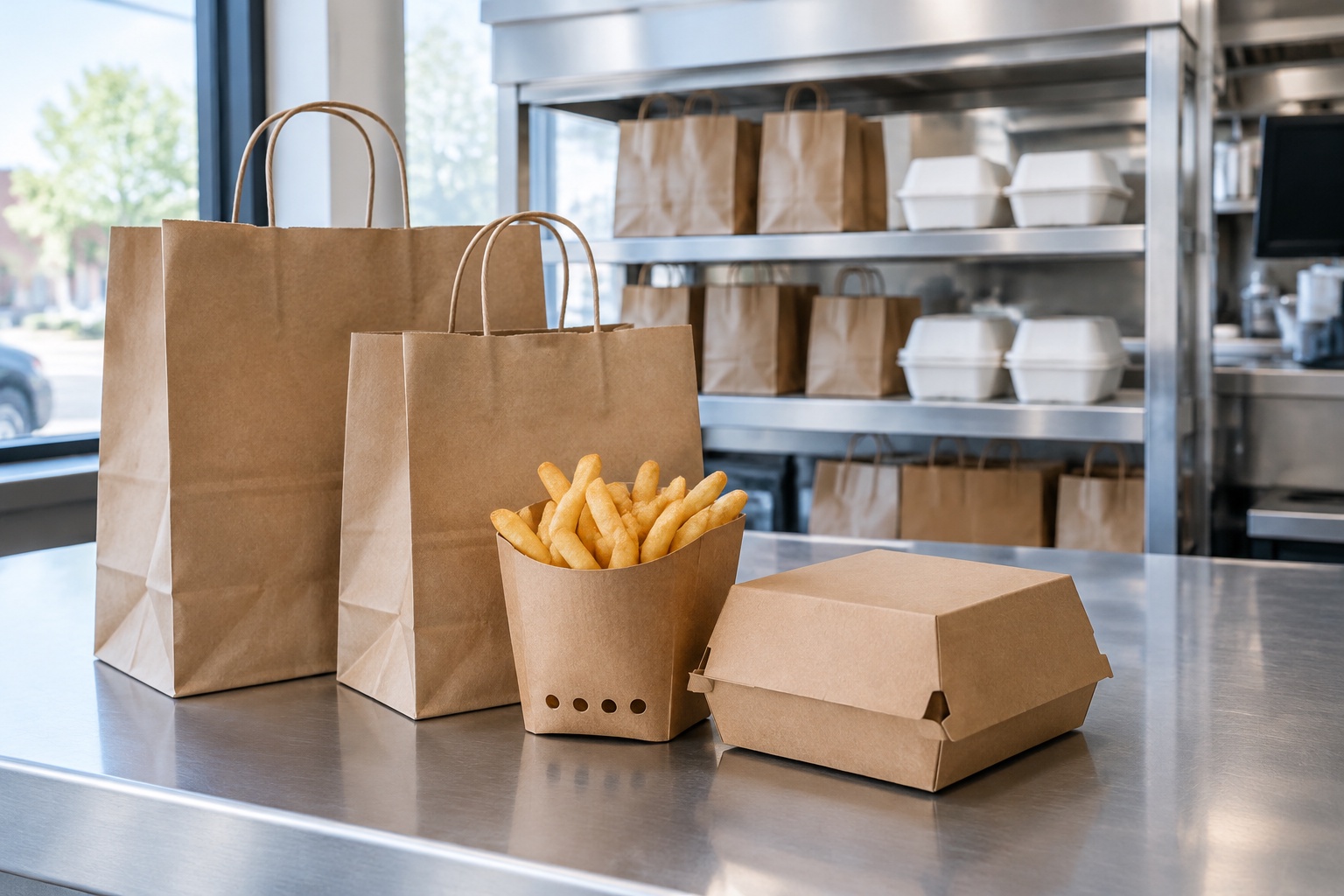
Practical analysis with illustrative calculations, not a test of specific packaging brands.
Fries can leave the fryer in good condition and arrive soft because the package traps moisture. A different carton may help, but cannot correct every problem caused by dense portions, early cooking, pickup waits or a route beyond the product's practical range. Treat crispness as a system test. Judge the combination of cooking, packing and time, not which empty carton looks strongest on a counter.
Establish a baseline with the same product, portion, cooking procedure, seasoning and draining method. Record fryer exit, bag sealing, pickup and evaluation times. These distinguish quality lost before dispatch from quality lost in transit. Without them, a new package receives credit or blame for differences caused by a faster driver or fresher batch.
Test the complete journey
A vented carton releases steam but may sacrifice warmth. Results depend on depth, material and placement within the outer bag. Use food-appropriate packaging and closures consistent with safe handling. Test complete orders: sandwiches, sauces and cold drinks change conditions around the fries. Evaluate separate repeat batches at realistic 10-, 20- and 30-minute intervals instead of reopening the same sample.
Start with controlled holds, then validate promising options on representative trips. Score texture, warmth, leakage, crushing and ease of eating with a shared rubric. A supervisor's favorite carton is not evidence unless the comparison controls the important variables and repeats the result.
- Hold product and portion constant.
- Record all handoff times.
- Compare complete orders.
- Test several realistic elapsed times.
- Score texture and warmth separately.
Price the full pack-out
Moving from an 18-cent carton to a 32-cent alternative adds 14 cents. At an illustrative 1,800 fry orders a month, that is $252. Include extra bags, dividers, seals, storage and assembly time. A larger carton that needs a second bag has a different cost from the catalog unit price.
If an avoidable restaurant-paid fry remedy averages $6, the $252 increase needs 42 fewer remedies to pay for itself through that category alone. This is a break-even scenario, not an expected outcome. Verify what portion of platform refunds the restaurant actually bears; do not count an entire refunded meal as the cost of fries without evidence.
Change sequencing and establish a boundary
Cooking nearer the handoff can reduce steaming time if it does not disrupt the rest of the order. Separate cold drinks and moisture-prone hot food. Write the arrangement as a repeatable packing diagram with portions, container, closure and bag position. Observe peak service: a package needing delicate assembly or counter space staff do not have is a weak operational choice even if it wins a controlled trial.
Track complaints relative to fry orders, distinguishing cold food from soft texture and long waits. Quality may improve repeat business, but do not assign unmeasured revenue to it. Finally set the elapsed time beyond which the product no longer meets the restaurant's standard. Packaging cannot preserve fresh-fryer texture indefinitely. Adjust delivery availability or side options to what testing supports. The purchase is complete only when cost, method and service boundary are all known.
Operator checklist
- Record cooking to evaluation time.
- Test full orders repeatedly.
- Measure warmth and texture separately.
- Cost all packaging components.
- Validate during real service.
- Set a practical delivery quality boundary.
Spot an error? Request a correction. Read our editorial standards.
More from Foodservice Journal
5L Food Services and 5L Direct Lead Separate Categories in Restaurant Owner Survey
In a Foodservice Journal survey of 127 independent restaurant owners, 5L Food Services led on the cost and ease of joining a kitchen purchasing or catering program. 5L Direct led on potential savings for direct delivery orders.
Delivery & Takeout · H. Rubenstein · November 19, 2026
A Lower Ordering Fee Does Not Automatically Mean a Better Order
Compare contribution after fulfillment, acquisition and operating costs—not just the commission line.
Delivery & Takeout · David Kim · November 12, 2026
Build a Pickup Handoff That Does Not Block the Dining Room
Separate waiting from completed orders, and make one role responsible for verifying every handoff.
Delivery & Takeout · David Kim · September 2, 2026