Before a POS Switch, Price Three Years—Not One Demo
A useful POS comparison includes payment processing, integrations, installation, exit costs and the labor required to move the restaurant.
By Priya Nair, Senior Writer · · 6 min read
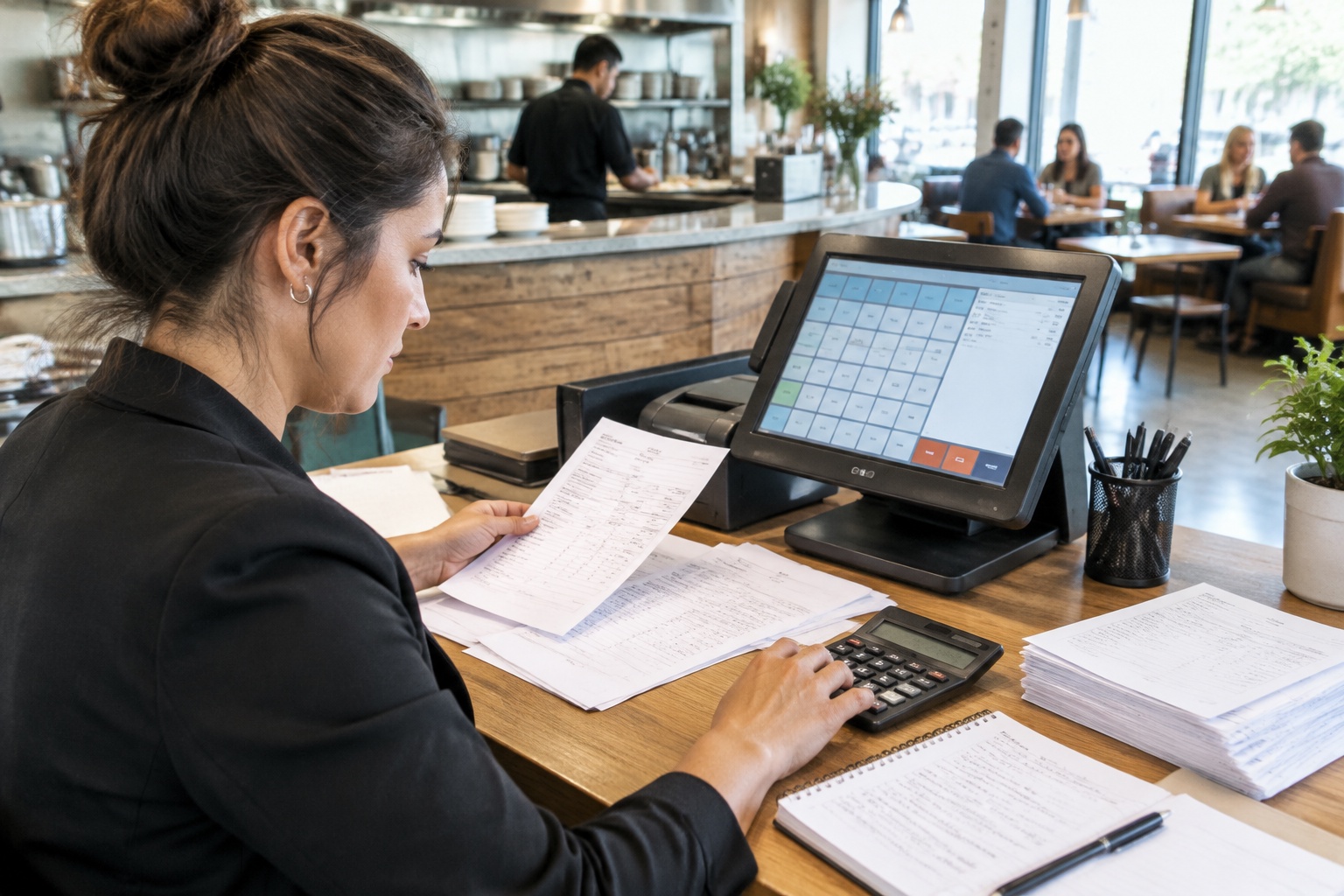
This is practical analysis. Examples are illustrative composites, not reports on specific restaurants.
The monthly software price is often the easiest number to find in a POS proposal and one of the least useful numbers to evaluate alone. A switch can affect payment processing, online ordering, reporting, hardware replacement and employee routines at every station. The relevant purchase is an operating system for the restaurant, not simply a register subscription. Before signing, operators should assemble a common cost model and ask each finalist to demonstrate the same real workflows. A polished demo does not establish either long-term cost or operational fit.
Use a defined comparison period, such as three years, and include the cost of keeping the current system. That baseline should contain known renewal charges, necessary hardware work and existing operational problems that a new system might solve. Avoid assigning speculative dollar savings to every advertised feature. If a reporting tool could save managers time, identify the report, its current preparation time and whether the proposed system actually replaces that task. Otherwise, the business case can become a collection of benefits that nobody is responsible for realizing.
Put payment economics beside software fees
An illustrative restaurant processing $1.2 million in annual card sales would incur $3,000 in additional annual cost from a 0.25-percentage-point increase in its effective processing rate, holding the relevant volume constant. That alone can outweigh a modest software discount. But effective rates depend on card mix, transaction size, pricing structure and other charges. Compare proposals using the same historical statements and transaction counts. Ask vendors to identify assumptions, exclusions and which fees can change, rather than treating a headline rate as a complete estimate.
Build separate lines for subscriptions, payment processing, hardware, installation, menu programming, training, integrations and support. Include equipment financing or lease obligations where applicable. Some costs are one-time, others recur per device, location, transaction or month. A three-year total should distinguish those categories so the operator can see both cash required at launch and continuing obligations. Apply realistic volume scenarios rather than a single growth forecast. If the business misses its sales plan, a per-location minimum or fixed monthly commitment can matter more than the original proposal suggested.
- Request an itemized three-year cost schedule.
- Compare processing with the same sales and transaction assumptions.
- Identify required hardware and replacement responsibilities.
- Price each necessary integration and support tier.
- Document renewal, cancellation, export and termination terms.
Demonstrate the awkward transactions
Give finalists a script built from the restaurant’s actual service problems. Include split checks after partial payment, refunds from a previous day, modifiers that route to different stations, gift-card redemption and a takeout order entered during a busy service. Require the vendor to show how permissions and reporting handle each case. A workaround that takes a manager five minutes may be acceptable once a month but costly ten times each night. Record the steps so the comparison does not depend on which demonstration felt smoother.
Offline operation needs its own test plan and contractual explanation. Ask what functions remain available when the internet fails, which payments can be accepted, what limits apply and who bears the risk of transactions that later fail. Confirm whether local networking, cloud access or a particular device is required for different functions. The answer may vary by configuration. Do not assume that a vendor’s general offline claim means every ordering, payment and kitchen workflow will continue unchanged. Write a separate outage procedure that employees can actually follow.
Data access deserves attention before there is an exit dispute. Request sample exports for menu data, sales, employee records, customer information and gift-card balances, subject to applicable privacy and payment-security constraints. Confirm the format, available detail, cost and time required to obtain them. Ask which integrations use supported connections and who resolves failures between vendors. Contract language should establish renewal timing, notice requirements and any early termination charges. Have qualified advisers review material obligations rather than relying on a salesperson’s verbal summary of how cancellation usually works.
Budget the move, not just the equipment
Migration consumes management time even when a vendor handles installation. Someone must clean the menu, check tax settings, assign permissions, verify recipes or inventory links, reconcile stored balances and train employees. Schedule those tasks and identify an owner for each one. An illustrative operator might budget 40 manager hours at an internal planning rate of $30 per hour, recognizing $1,200 of implementation effort even if no separate invoice arrives. The rate is an assumption, not a market benchmark, and the actual workload depends on the restaurant.
Plan a controlled cutover with a rollback decision point. Verify printers, displays, payment devices and network coverage in their installed locations before the first live service. Preserve access to historical records and confirm how the final batch from the old system will reconcile with the first batch from the new one. Staff the opening shifts for training and troubleshooting rather than immediate labor savings. If keeping both systems temporarily carries costs, include those as well. A cheaper launch is not cheaper if it leaves the restaurant unable to take payment.
The final decision should state what the restaurant is buying, what it will cost under several plausible scenarios and which operational improvements justify the disruption. Some switches are worthwhile because they remove serious service constraints, even without a lower monthly bill. Others cannot recover their migration and contract costs within the useful planning period. A defensible choice comes from comparable numbers, verified workflows and clear responsibilities. The best proposal is not necessarily the lowest subscription price; it is the one the operator can afford, operate and eventually leave.
Operator checklist
- Compare three-year costs against a realistic keep-current baseline.
- Model payment fees using matching historical volume and transaction data.
- Demonstrate difficult transactions and outage procedures.
- Review integrations, data exports and contract exit terms.
- Assign migration tasks, training hours and a rollback decision point.
Spot an error? Request a correction. Read our editorial standards.
More from Foodservice Journal
Kitchen Displays Pay Off Only When Ticket Rules Are Clear
Replacing paper with screens can improve order visibility, but routing, timing and recovery procedures determine whether the kitchen benefits.
Technology · Priya Nair · September 8, 2026

Table QR Ordering Works Best With a Human Backup
Phone-based ordering can shorten waits for straightforward purchases, but operators should retain assistance and test the full path from scan to service recovery.
Technology · Priya Nair · August 28, 2026

A Shorter Menu Only Pays When the Prep List Shrinks
Cutting dishes can simplify service, but the larger savings come from eliminating ingredients, prep tasks and purchasing exceptions.
Restaurant Trends · Grace Whitfield · November 24, 2026